
Views: 0 Author: Site Editor Publish Time: 2026-04-08 Origin: Site


DC axial fans are essential components in both industrial and commercial applications. They provide superior performance, helping businesses in various industries improve their cooling and ventilation systems. However, the needs of these two sectors differ greatly, and the construction materials and design of the fans must reflect that. This article explores the importance of heavy-duty construction in industrial DC axial fans and why it matters.
At Fanova (Suzhou) Motor Technology Co., Ltd., we offer a wide range of high-quality DC axial fans for both commercial and industrial use. Understanding the critical distinctions between industrial and commercial fans will allow you to choose the best fan for your specific needs.
DC axial fans are a type of fan that operates by moving air along the axis of rotation. These fans are well-known for their efficiency in applications that require high airflow, such as cooling systems, ventilation, and exhaust systems. DC axial fans are favored in both residential and industrial applications due to their energy efficiency, which makes them an excellent choice for systems that need consistent operation with minimal energy consumption.
There are two main types of DC axial fans based on their applications: commercial and industrial fans. Both types share the same basic operating principle, but their design and performance specifications differ significantly based on the environment they are meant to serve.
· Commercial DC Axial Fans: These fans are designed for smaller, less demanding environments such as office buildings, retail stores, and small commercial spaces. The primary goal of commercial fans is to provide efficient cooling in spaces with standard airflow needs. These fans typically focus on energy efficiency, low noise operation, and cost-effectiveness. Commercial DC axial fans are perfect for spaces where the cooling needs are moderate, and the fan doesn't have to work in harsh conditions.
· Industrial DC Axial Fans: These fans are built for larger spaces and more demanding environments. They are used in factories, warehouses, manufacturing plants, and heavy-duty industrial applications where high airflow and consistent performance are required. Industrial fans are capable of handling higher loads, extreme temperatures, and continuous operation. They are engineered to withstand dust, chemicals, and high-pressure environments without compromising on performance.
While both commercial and industrial DC axial fans have the same basic function, they are designed with different performance levels and durability requirements. The main differences between these two types of fans lie in their performance requirements, construction, and design features.
Commercial Fans: Commercial DC axial fans are designed to handle standard airflow needs in smaller, more controlled environments. These fans are optimized for efficiency, low noise, and energy savings. The performance in commercial spaces is generally not as demanding, and the fan is required to maintain air circulation in a controlled, temperature-regulated environment.
Applications:
o Office Buildings: Commercial fans provide sufficient airflow to keep office spaces comfortable without excessive noise or power consumption.
o Retail Stores: These fans are ideal for smaller retail spaces where air circulation is important for customer comfort but not for high-demand environments.
o Residential Use: Many homes and smaller buildings use DC axial fans to maintain air quality and circulation at low operational costs.
Industrial Fans: Industrial DC axial fans are built to manage high volumes of air and high static pressures. These fans are designed to meet the rigorous demands of industries where continuous airflow is critical for operational efficiency. They are built to provide consistent airflow, even under challenging conditions such as high temperatures, constant usage, and exposure to dust or chemicals.
Applications:
o Manufacturing Plants: Industrial fans are used to circulate air and maintain temperature control in large manufacturing environments.
o Warehouses: These fans ensure that large warehouse spaces have adequate ventilation to keep both products and workers comfortable.
o Heavy-Duty Equipment Cooling: In industries that require cooling for large machinery, industrial DC axial fans maintain proper airflow to prevent overheating.
The construction of industrial DC axial fans is designed to withstand demanding environments. These fans are made with robust, durable materials and advanced engineering to endure extreme conditions and heavy workloads.
· Durability: Industrial environments can be harsh, and equipment is often required to operate continuously without failure. Heavy-duty construction ensures that industrial fans can withstand the constant stresses of heavy use in extreme environments, without compromising their performance.
· High Performance: Industrial DC axial fans are designed to deliver consistent performance, even under high-load or high-temperature conditions. Whether it's handling high static pressure in a factory setting or maintaining airflow in a chemical plant, these fans provide reliable performance without breakdowns.
· Energy Efficiency: Despite their heavy-duty construction, industrial fans are designed to be energy-efficient, which helps reduce operational costs over time. This is particularly important for industries with continuous operations, where energy savings can significantly contribute to long-term profitability.
Another key difference between commercial and industrial DC axial fans lies in their motor and blade design. Commercial fans tend to use smaller motors and blades designed for lighter loads, while industrial fans utilize more robust motors and larger blades to handle the higher airflow demands.
· Commercial Fans: Smaller motors and blades are designed for light to moderate airflow applications. These fans are built to be compact and efficient, providing the required airflow in environments where performance is not highly demanding.
· Industrial Fans: The motor and blade design in industrial fans are engineered to handle larger volumes of air and higher static pressures. Industrial DC axial fans are built with more powerful motors, capable of handling demanding workloads, and ensuring longer service life, even under extreme operating conditions.
Selecting the right DC axial fan depends on several factors, including the size of the space, airflow requirements, and environmental conditions. Here’s how to choose between commercial and industrial DC axial fans:
· For Commercial Applications: Smaller fans that are energy-efficient and designed for light use are ideal. These fans are best suited for environments where airflow requirements are moderate, such as in offices, retail stores, and smaller commercial spaces.
· For Industrial Applications: Fans for industrial use should be selected based on their ability to handle higher volumes of air and static pressure. The durability, heavy-duty construction, and energy efficiency of the fan are the most important factors in industrial environments like manufacturing plants and warehouses.
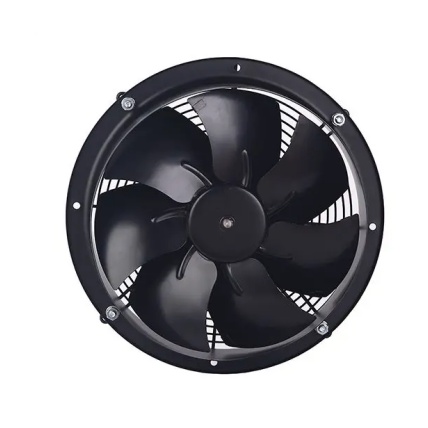
Choosing industrial DC axial fans comes with several advantages:
· Longer Lifespan: Heavy-duty industrial fans are designed to last longer, even with constant operation in tough environments. Their robust design ensures they can handle the demands of industrial use without frequent breakdowns.
· Reliable Performance: Industrial fans are built to provide consistent performance, even in the most demanding environments. This reliability is crucial for industries where fan failure could result in significant downtime or production delays.
· Cost Savings: While industrial DC axial fans may have a higher initial cost, their durability and energy efficiency result in long-term savings by reducing the need for repairs and replacements, making them a cost-effective investment in the long run.
Feature | Commercial DC Axial Fans | Industrial DC Axial Fans |
Performance | Ideal for standard airflow requirements | Built for high airflow and high static pressure |
Construction | Lightweight, compact, and cost-effective | Heavy-duty, robust for extreme conditions |
Motor and Blade Design | Smaller motors and blades for light loads | Powerful motors and larger blades for heavy loads |
Energy Efficiency | Energy-efficient for light to medium use | High performance with energy savings over time |
In conclusion, industrial DC axial fans are critical for maintaining efficient and reliable systems in challenging environments. They offer high performance, durability, and energy efficiency, making them ideal for industrial applications. By choosing the right fan for your needs, you can ensure optimal airflow, reduce downtime, and enhance overall operational efficiency.
At Fanova (Suzhou) Motor Technology Co., Ltd., we specialize in providing high-performance DC axial fans designed for both commercial and industrial applications. If you're looking for reliable fans for your systems, feel free to contact us for more information and assistance.
1) What is the difference between industrial and commercial DC axial fans?
Industrial DC axial fans are designed for larger environments and more demanding conditions, offering higher airflow and static pressure. Commercial fans are suitable for smaller, less demanding spaces.
2) How do I choose the right fan for my application?
Consider factors such as space size, airflow needs, and environmental conditions. For industrial environments, opt for heavy-duty construction with high performance, while for commercial spaces, choose energy-efficient models.
3) Why is heavy-duty construction important for industrial fans?
Industrial fans need to withstand harsh conditions and continuous operation. Heavy-duty construction ensures durability, reliable performance, and energy efficiency under demanding circumstances.
4) Can I use a commercial fan in an industrial setting?
While commercial fans are ideal for smaller spaces, they may not provide the necessary performance and durability required in industrial settings where fans are subject to extreme conditions and need to handle larger volumes of air.


