
Views: 0 Author: Site Editor Publish Time: 2026-03-28 Origin: Site


When selecting a fan for your industrial or commercial applications, one of the first decisions you'll need to make is whether to go with a DC axial fan or an AC axial fan. Both types of fans serve similar functions — moving air efficiently — but they have distinct differences in terms of energy consumption, control, and ideal use cases. At Fanova (Suzhou) Motor Technology Co., Ltd., we specialize in providing high-performance fans designed to meet the needs of various industries. In this article, we will compare DC axial fans and AC axial fans, focusing on their differences and helping you choose the best option for your specific needs.
Understanding the advantages and limitations of each fan type can make a huge difference in your energy costs, system reliability, and overall performance. Let’s dive into the details and explore which type of axial fan is best suited for your application.
Before delving into the differences between DC axial fans and AC axial fans, let’s first understand what an axial fan is. Axial fans are a type of mechanical fan where the flow of air moves parallel to the axis of rotation. The blades of the fan rotate around a central hub, generating airflow in the same direction. This makes axial fans highly efficient in moving large volumes of air and they are commonly used in applications where high airflow is needed without high pressure, such as ventilation systems, cooling applications, and even in some heating systems.
Now, let’s break down the key differences between DC and AC axial fans, starting with their power sources and energy efficiency.
DC axial fans are widely regarded for their energy efficiency, precise speed control, and compact design, making them a preferred choice for many modern applications. These fans use direct current (DC) to operate, and their unique characteristics make them highly effective in providing efficient airflow while reducing energy consumption. Below, we will explore these primary benefits in detail.
One of the standout advantages of DC axial fans is their energy efficiency. These fans are powered by direct current, which allows them to convert electrical energy into mechanical power more effectively than their AC counterparts. Unlike AC fans, which rely on alternating current (AC) and can experience energy losses due to factors like resistance and power fluctuations, DC fans operate with greater consistency, ensuring that more of the input energy is utilized for airflow generation.
This increased efficiency results in significant energy savings over time, especially in applications where the fan runs continuously. DC axial fans are particularly suited for 24/7 operations, such as in computer cooling systems, telecommunications equipment, and other electronic devices that require constant airflow to maintain optimal temperature conditions. As a result, these fans help reduce operating costs and contribute to more sustainable energy consumption, making them an attractive choice for industries aiming to reduce their overall energy footprint.
Another significant benefit of DC axial fans is their ability to provide precise speed control. Since DC motors operate on a steady current, the speed of the fan can be easily adjusted by varying the voltage supplied to the motor. This feature makes DC fans ideal for applications that require dynamic adjustments in airflow or need to maintain specific airflow conditions based on system demands.
One of the distinguishing features of DC axial fans is their compact size and quiet operation. DC fans are typically smaller and more lightweight compared to their AC counterparts, making them ideal for applications where space is limited or where the fan must fit into confined or intricate spaces. Whether it's for home appliances, medical equipment, or office cooling systems, the small form factor of DC axial fans makes them easier to integrate into various environments.
Feature | DC Axial Fans | Application Benefits |
Energy Efficiency | Higher efficiency, lower energy consumption | Ideal for continuous use in electronics, telecommunications |
Speed Control | Precise speed adjustment via voltage regulation | Best for applications requiring variable airflow (e.g., data centers) |
Compact Size | Smaller footprint for easy integration | Fits in tight spaces like appliances, medical devices |
Quiet Operation | Lower noise levels | Perfect for noise-sensitive environments like offices or hospitals |
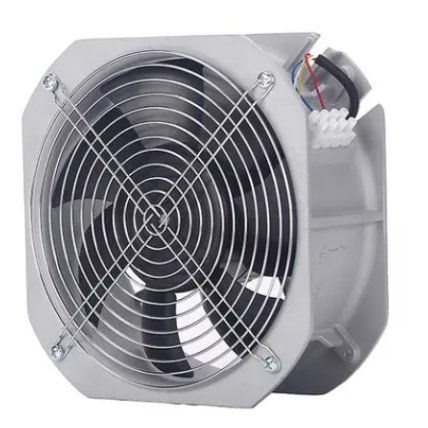
While DC axial fans are known for their efficiency, AC axial fans are often preferred in high-power applications. Let’s explore why AC axial fans remain a solid choice for many industries.
AC axial fans are driven by alternating current (AC), which allows them to handle higher power outputs than DC axial fans. This makes AC fans ideal for large-scale industrial applications where high airflow is required. AC axial fans are commonly used in large HVAC systems, commercial air conditioning, ventilation systems, and industrial equipment cooling.
In industries such as manufacturing and large-scale cooling systems, where large volumes of air need to be moved over long distances, AC axial fans provide the necessary power to meet those demands. Their robust motors and high-performance capabilities make them well-suited for environments where consistent, high-powered airflow is critical.
AC axial fans tend to have a longer lifespan and are more durable than DC fans, particularly in environments with fluctuating temperatures or harsh operating conditions. Since AC motors don’t rely on the intricate components of a DC motor, they can endure heavier workloads and more demanding conditions, making them a reliable choice for industrial settings.
Additionally, AC axial fans are less sensitive to voltage fluctuations, which further enhances their reliability in industrial applications. This resilience is why AC fans are widely used in environments like factories, warehouses, and large commercial buildings.
While DC axial fans are known for their energy efficiency, AC axial fans often come with a lower initial purchase cost. This can make them a more affordable option for businesses that are looking for high-powered fans but are working with a tight budget. For applications where long-term energy savings are less of a concern or where the fan operates intermittently, AC fans can offer a cost-effective solution without compromising on performance.
The choice between DC axial fans and AC axial fans depends largely on your specific application and priorities. Here’s a quick guide to help you decide which type of fan is best suited for your needs:
Feature | DC Axial Fans | AC Axial Fans |
Energy Efficiency | Higher efficiency, reduces operational costs | Lower efficiency compared to DC fans |
Speed Control | Precise speed control for variable airflow | Limited speed control options |
Noise Level | Quieter operation, ideal for noise-sensitive areas | Slightly noisier due to high-power motors |
Power Output | Suitable for low to medium-power applications | Ideal for high-power, industrial use |
Cost | Higher initial cost but lower long-term expenses | Lower initial cost, but higher operating costs |
Durability | Less durable in heavy-duty applications | More durable and longer lifespan in harsh environments |
· Choose DC axial fans if you need precise airflow control, energy efficiency, and quiet operation for medium-power applications. These fans are great for electronics cooling, computer systems, and HVAC systems in smaller or noise-sensitive environments.
· Choose AC axial fans if you need high power output and durability for large-scale industrial or commercial applications. They are better suited for environments where airflow needs are consistent and demanding, such as in large-scale HVAC systems or factory ventilation.
Both DC axial fans and AC axial fans offer unique benefits that make them ideal for different applications. Understanding your specific needs—whether it’s energy efficiency, power output, or durability—will help you make the right choice. At Fanova (Suzhou) Motor Technology Co., Ltd., we provide high-quality fans tailored to meet the needs of various industries, ensuring that you get the best performance and value for your investment. If you’d like to learn more about our range of DC and AC axial fans and how they can benefit your applications, contact us today.
DC axial fans are more energy-efficient and offer precise speed control, making them ideal for smaller applications with variable airflow needs. AC axial fans, on the other hand, are more suitable for high-power industrial applications due to their durability and robust performance.
DC axial fans are generally quieter due to their low-power operation and smoother performance. This makes them ideal for noise-sensitive environments such as offices or medical facilities.
For high-power applications, AC axial fans are recommended as they are designed to handle larger loads and provide higher airflow capacity. DC fans are more suited for medium-power and precision applications.
Yes, DC axial fans are more energy-efficient than AC axial fans because they use less power for the same airflow and provide better speed control, which reduces energy consumption in the long term.


