
Views: 0 Author: Site Editor Publish Time: 2026-04-01 Origin: Site


When it comes to selecting and optimizing DC axial fans for specific applications, understanding two critical performance factors—CFM (Cubic Feet per Minute) and static pressure—is essential. These factors play a pivotal role in determining how well a DC axial fan will perform, especially in confined or tight enclosures where airflow challenges are common. As businesses increasingly require efficient, low-noise, and energy-efficient ventilation systems, the importance of understanding these parameters has never been greater.
At Fanova (Suzhou) Motor Technology Co., Ltd., we are dedicated to providing high-quality fan solutions that cater to the specific needs of our clients. This article delves into the relationship between CFM, static pressure, and fan performance, offering insights into how you can optimize your DC axial fan to achieve the best results in tight spaces.
CFM, or Cubic Feet per Minute, is a measurement of the volume of air that a fan can move in one minute. In simpler terms, it indicates the airflow capacity of a fan—how much air is being moved through the system. When evaluating fans, CFM is one of the most important specifications to consider, as it directly correlates with the fan’s ability to provide sufficient ventilation and cooling in a space.
For DC axial fans, understanding the CFM rating helps determine whether the fan can handle the airflow demands of a particular application. If the fan’s CFM rating is too low, it may fail to circulate enough air, leading to poor performance, higher temperatures, or insufficient ventilation.
· Airflow Efficiency: The primary function of a fan is to move air. CFM measures this ability and ensures that the fan can meet the required airflow for your system. If you're working in a tight enclosure or confined space, a DC axial fan with the right CFM rating is necessary to avoid hot spots and ensure efficient cooling.
· Space Constraints: In tight or confined spaces, like server rooms or equipment enclosures, the available space limits the size and design of the fan. Understanding CFM helps you select the right fan size and configuration to maximize airflow without overcrowding the space.
· System Optimization: When fans are properly sized for the required CFM, your ventilation or cooling system will work more efficiently, reducing energy consumption and improving performance.
Static pressure refers to the resistance that air encounters as it moves through a system. For fans, static pressure is the force exerted by the air as it is pushed through ductwork, filters, or any other obstacles in the system. In simple terms, static pressure measures how hard the fan must work to overcome the resistance and keep air moving through the system.
In DC axial fans, static pressure is a crucial factor, especially in systems where air is forced to move through narrow spaces or against resistance, such as filters, bends, or ductwork. Fans operating in environments with higher static pressure require more power and better design to maintain performance.
· Overcoming Resistance: When air moves through a confined space with obstructions, such as filters, ducts, or bends, static pressure increases. A DC axial fan must be able to overcome this resistance to maintain the desired airflow. If the fan cannot generate enough pressure, airflow will be compromised, leading to reduced cooling or ventilation efficiency.
· Fan Selection: When selecting a DC axial fan for a system with higher static pressure, it’s crucial to ensure that the fan is capable of handling the pressure load. If a fan is chosen without considering static pressure, it might struggle to perform, resulting in poor efficiency or failure to meet airflow requirements.
· System Design: Understanding static pressure helps engineers design air systems that balance airflow and resistance. It ensures that fans are placed correctly and that airflow is maintained without overloading the fan motor or components.
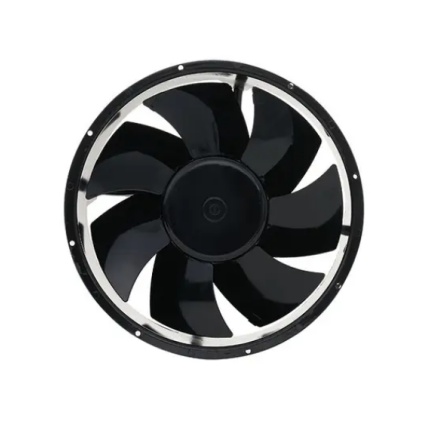
In tight enclosures, the performance of DC axial fans is heavily influenced by both CFM (Cubic Feet per Minute) and static pressure. When designing an airflow system, both factors need to be carefully balanced to ensure optimal fan operation. High static pressure can cause a fan to struggle, even if it has a high CFM rating. Conversely, a fan with an overly high CFM rating may move too much air in an environment where precise airflow control is required, potentially creating turbulence or excessive noise.
To optimize your DC axial fan performance in these tight spaces, you must consider these crucial elements:
· Correct Fan Size: Choose a fan that not only handles the required CFM but also can effectively overcome the static pressure in the system. For confined spaces, a fan with a higher static pressure rating but a lower CFM output may be necessary to avoid excessive airflow. This allows the fan to operate efficiently, ensuring proper air circulation without compromising control.
· Efficient Airflow Pathways: Minimizing resistance in the system is key to ensuring that the DC axial fan performs at its best. You can achieve this by creating smooth, direct pathways for the airflow, avoiding unnecessary turns, bends, or obstructions that could increase static pressure. Reducing these resistances allows the fan to perform efficiently and at lower energy costs while maintaining effective airflow.
Ensuring an optimal balance between CFM and static pressure ensures that your DC axial fan works efficiently in tight enclosures, providing reliable ventilation and cooling without unnecessary energy consumption or performance degradation.
When selecting a DC axial fan, it is crucial to understand the specific requirements of your application. The size, CFM, and static pressure should be tailored to the operational needs of the space.
· For High Static Pressure Applications: If your enclosure has high static pressure, typically caused by small ducts, filters, or other restrictions, choose a DC axial fan that is designed to handle the extra resistance. These fans have higher static pressure ratings and are built to push air through the system, ensuring consistent airflow even when resistance is high.
· For High CFM Applications: If your goal is to maximize airflow in a larger space, opt for a DC axial fan with a higher CFM rating. However, it is essential to ensure that the fan can still manage potential resistance within the system. Without proper resistance handling, even a high CFM fan can underperform or become inefficient, leading to increased energy usage and decreased effectiveness.
By matching your fan to the specific needs of your application, you ensure that the DC axial fan provides optimal airflow while overcoming challenges like high static pressure or extensive airflow demands. This results in improved system performance, efficiency, and longevity.
Feature | DC Axial Fans | Application Benefits |
Energy Efficiency | Low energy consumption for long-term use | Ideal for continuous operation in tight spaces |
CFM Rating | Ensures the fan moves the right volume of air | Maximizes ventilation or cooling efficiency |
Static Pressure | High static pressure ratings for demanding systems | Handles resistance in narrow or obstructed spaces |
Size and Design | Compact design for limited space environments | Fits in tight enclosures while maintaining efficiency |
Understanding how CFM and static pressure affect the performance of DC axial fans is essential for selecting the right fan for your application, particularly when operating in tight enclosures. By considering both airflow requirements and resistance factors, you can optimize your DC axial fan system for better energy efficiency, performance, and reliability. At Fanova (Suzhou) Motor Technology Co., Ltd., we offer a wide range of DC axial fans designed to meet the specific needs of various industries. If you're looking to optimize your fan system or need expert advice, contact us today to learn more about our products and how we can assist with your airflow solutions.
CFM measures the volume of air moved by the fan, while static pressure measures the resistance the fan must overcome to maintain airflow. Both factors must be balanced for optimal fan performance.
No, for high static pressure applications, you’ll need a fan designed to handle the resistance, while high CFM applications require a fan with the ability to move a larger volume of air.
To calculate the CFM required, you need to know the size of your enclosure and the required air changes per hour (ACH) for your application. Multiply the volume of the space by the required ACH.
High static pressure in tight spaces or obstructed systems increases resistance, which can reduce fan efficiency. Ensuring the fan can handle the pressure is critical for maintaining effective airflow.


