
Views: 0 Author: Site Editor Publish Time: 2026-06-24 Origin: Site


Facility managers and engineers face immense commercial pressure today. They must balance strict compliance standards for indoor air quality against aggressive energy-reduction targets. Achieving both goals simultaneously is incredibly difficult for modern building operations.
Traditional AC-motor fans operate inefficiently under the variable load conditions required by modern HVAC standards. They waste massive amounts of electricity when running at partial capacity. This fundamental technical flaw leads to continuously inflated operational expenditures and excessive energy waste.
Upgrading to an electronically commutated (EC) system provides the industry-standard solution for high-efficiency variable-speed ventilation. We will explore the technical advantages, implementation realities, and system reliability of these modern units. You will learn how shifting to advanced fan technologies drives measurable energy savings and improves precise climate control across your facilities.
ROI Focus: EC fans typically deliver 30–50% energy savings over traditional AC models, offsetting their higher initial CapEx through accelerated payback periods.
Operational Control: Built-in variable speed drives (VSD) allow for precise, demand-based airflow without the need for external inverters.
System Longevity: Lower operating temperatures and brushless technology significantly reduce mechanical wear and maintenance downtime.
Seamless Integration: Modern EC fans are designed for direct integration into existing Building Management Systems (BMS) for intelligent monitoring and control.
Tightening energy codes actively push facilities to upgrade aging HVAC infrastructure. Regulatory frameworks like ASHRAE 90.1 and the European ErP directives enforce strict minimum efficiency limits. These codes target outdated mechanical components. They force building owners to rethink how they manage commercial air handling units. Ignoring these regulatory shifts often results in financial penalties and restricted building certifications.
Traditional AC fans fail completely at partial loads. AC motors rely on inefficient voltage manipulation to reduce speed. Sometimes they use physical mechanical dampers instead. Both methods waste valuable energy by converting it into useless heat. When an AC fan drops to half speed, it still consumes a disproportionately high amount of power. They cannot adapt efficiently to changing environmental demands.
This creates a massive dilemma for facility managers. Maintaining consistent, compliant indoor environments is nearly impossible using inflexible systems. Single-speed AC systems either over-ventilate or under-ventilate rooms based on static settings. Over-ventilation wastes expensive conditioned air. Under-ventilation directly compromises occupant health. You need flexible, demand-driven systems to solve this complex challenge effectively.
Common Mistake: Relying on variable frequency drives (VFDs) paired with standard AC motors to meet new regulations. This combination often creates excessive motor heat and reduces overall system lifespan.
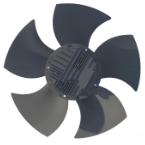
Understanding the mechanical differences between these motors reveals why a modern Fresh Air Ventilation Fan performs better. EC technology represents a significant leap forward. An EC motor takes alternating current (AC) from the power grid. It then converts this power into direct current (DC) inside the motor itself. Electronic commutation drives the rotor. This eliminates the magnetic slip inherent in standard AC motors. The result is a frictionless, highly precise rotation.
Efficiency curves highlight the performance gap perfectly. AC fans lose drastic efficiency when dialed down from maximum speed. Their performance curves drop steeply. Conversely, an EC model maintains a nearly flat, high-efficiency curve across a wide operating range. It runs optimally at 100% speed and at 30% speed. This flexibility guarantees consistent energy savings during variable load periods.
Space and weight economy offer another massive advantage. EC fans integrate the motor, the controller, and the impeller into one compact unit. They eliminate external VFD boxes and bulky electrical panels. This integration saves valuable footprint in tight mechanical rooms. It also reduces structural stress on rooftop units. Installation becomes faster and requires fewer external wiring connections.
Feature / Specification | Standard AC Fan | Modern EC Fan |
|---|---|---|
Motor Technology | Induction-based, relies on magnetic slip | Brushless DC, electronically commutated |
Partial Load Efficiency | Drops severely below 80% speed | Maintains 80-90% efficiency at low speeds |
Speed Control Method | External VFD or physical dampers | Integrated internal electronics (0-10V/PWM) |
Physical Footprint | Bulky (requires separate drive panels) | Highly compact (all-in-one unit) |
Deploying a robust EC axial fan fundamentally transforms building operations. It shifts the mechanical strategy from reactive to proactive. Let us examine the tangible commercial benefits derived from this specific technology upgrade.
You transition immediately from fixed energy consumption to demand-driven usage. This shift eliminates wasted power during unoccupied hours. EC motors run perfectly at partial speeds during mild weather. Standard baseline expectations for return on investment generally range from one to three years. This timeframe depends heavily on local utility rates and your daily runtimes. Once the initial investment clears, the energy savings directly boost the facility's net operating income.
Noise reduction matters greatly in commercial environments. Standard motors generate an annoying low-frequency hum. They also produce aggressive aerodynamic noise when forcing air through restrictive dampers. An optimized fresh air system utilizing EC technology eliminates this motor hum entirely. Precision-engineered impellers slice through the air smoothly. This acoustic improvement proves critical for schools, hospitals, and corporate offices. Quiet operations ensure higher productivity and better occupant comfort.
Facility engineers require granular data to manage modern buildings effectively. EC motors feature native control inputs right out of the box. These include 0-10V, PWM, and Modbus RTU protocols. They integrate directly into any central Building Management System. This integration unlocks "beyond energy" benefits.
Key intelligent control advantages include:
Real-time Fault Reporting: The motor instantly flags voltage drops or blocked rotors to the central dashboard.
Predictive Maintenance: Operating hours and thermal data help engineers replace parts before catastrophic failures occur.
Automated Modulation: Fans adjust speed automatically based on CO2 sensor readings in individual rooms.
Standard AC motors utilize carbon brushes that degrade over time. EC motors feature advanced brushless technology. They eliminate physical friction points inside the motor housing. Furthermore, EC units generate significantly less excess heat during operation. Cooler operational thermals reduce thermal degradation on internal bearings. This combination leads to a longer, maintenance-free lifecycle. Your maintenance staff spends less time greasing bearings and more time optimizing overall facility performance.
Upgrading your mechanical infrastructure requires careful planning. While the benefits remain clear, facility teams must navigate specific implementation hurdles. Understanding these risks upfront ensures a successful retrofit project.
We must transparently acknowledge the CapEx hurdle. EC technology requires a higher initial investment compared to standard AC replacements. The sophisticated internal electronics drive this upfront cost higher. However, you must frame this capital expense against long-term lifecycle savings. The reduced electricity consumption offsets the premium price tag quickly. Budget approvals often require detailed energy models to prove this accelerated payback period.
Retrofitting complex mechanical rooms presents logistical challenges. Facility managers face a choice between replacing existing fan arrays (fan walls) or installing drop-in single units. Fan arrays offer superior redundancy. If one small fan fails, the others speed up to compensate. Drop-in single replacements cost less initially but require heavy lifting equipment. You must assess the physical access routes to your air handling units before choosing a strategy.
Electrical grid compatibility demands engineering attention. Advanced electronic components sometimes introduce harmonic distortion into a building's electrical grid. Highly sensitive environments, like laboratories or data centers, cannot tolerate these electrical anomalies. Modern EC fans utilize built-in active and passive filtering to mitigate this risk. You must verify these filter specifications with your electrical engineer before purchasing.
Finally, airflow recalibration is absolutely necessary. You cannot simply install new fans and turn them on. The new equipment will alter the pressure dynamics within your existing ductwork. You must re-balance the air distribution network. Verifying static pressure ensures the system delivers the intended energy efficient airflow. Skipping this crucial step leads to whistling ducts and drafts.
Best Practice: Always hire a certified testing, adjusting, and balancing (TAB) professional after completing an EC retrofit. Proper balancing guarantees you capture the full energy savings projected in your initial audit.
Procuring the correct hardware determines the ultimate success of your retrofit project. The market offers hundreds of variations. You must apply strict shortlisting logic to filter out sub-optimal products.
Begin by mapping specifications to your precise success criteria. You must match the new fan specifications to the specific load requirements of the building. Focus heavily on Cubic Feet per Minute (CFM) targets and peak static pressure ratings. Evaluate the physical dimensions closely. A highly efficient fan serves no purpose if it cannot fit through your mechanical room doors. Work backward from your building's required air exchange rates to determine the exact motor size needed.
Evaluating vendor trustworthiness protects your investment. Many manufacturers publish peak-efficiency marketing claims. These isolated data points do not reflect real-world variable operations. Look for rigorous third-party certifications instead. Demand to see AMCA, UL, and CE stamps on the technical datasheets. You should also request transparent lifecycle testing data. Reliable vendors will gladly share their accelerated wear test results.
Consider redundancy and scalability for mission-critical operations. Data centers, hospitals, and pharmaceutical labs cannot tolerate mechanical failures. A single point of failure is unacceptable in these environments. We strongly recommend specifying modular EC fan arrays for these applications. You can stack multiple smaller fans together in a grid. This setup guarantees continuous airflow even during individual motor maintenance.
Your next-step actions should minimize institutional risk. Do not attempt a facility-wide rollout immediately. We recommend initiating a focused energy audit first. Use dataloggers to track the power consumption of one existing AC unit. Next, perform a pilot retrofit on a single Air Handling Unit (AHU). Monitor the performance of this new ventilation equipment for three months. Use the recorded data from the pilot to secure funding for the remaining facility upgrades.
Transitioning to EC technology is not merely an optional energy-saving tactic. It represents a necessary, critical upgrade for intelligent, compliance-ready building management. Facilities cannot meet modern efficiency mandates using outdated, single-speed mechanical components.
While the upfront capital costs run higher, the measurable operational efficiency proves undeniable. Simplified maintenance routines and robust integration capabilities make these advanced motors the most defensible choice for building decision-makers. They actively protect both occupant health and operating budgets.
We encourage you to act proactively before older equipment fails unexpectedly. Contact an engineering specialist today to calculate a custom ROI model for your specific facility. Review detailed specification sheets and begin planning your upcoming HVAC modernization project.
A: Generally, the payback period ranges from 1 to 3 years. This timeline is heavily dependent on total operating hours, specific load profiles, and your local energy costs. Facilities running 24/7 see the fastest returns.
A: Yes, they often serve as direct replacements through specialized retrofit kits. However, minor mounting plate adjustments and wiring adaptations for the 0-10V control lines are usually required during installation.
A: By seamlessly integrating with CO2 or VOC sensors via a BMS, they modulate airflow precisely to actual room demand. This prevents stagnant air build-up during occupied hours without over-ventilating empty spaces.
A: No, the control electronics and variable speed capabilities are fully integrated directly into the motor housing. This internal design eliminates the cost, complexity, and space requirements of external VFDs.


