
Views: 0 Author: Site Editor Publish Time: 2026-06-13 Origin: Site


Commercial ventilation is shifting rapidly. Facilities no longer rely on passive energy consumption. Today, they demand active thermal management. Escalating electricity costs force managers to act quickly. Stringent global ESG standards also push purchasing directors to scrutinize legacy AC systems closely. Upgrading to an EC fan is no longer just a simple hardware swap. It represents a measurable, compliance-driven operational strategy. You can drastically cut OPEX and improve building asset valuations. These upgrades directly boost EPC ratings. They also future-proof your thermal management infrastructure against upcoming regulations.
In this comprehensive guide, you will discover the exact mechanics behind this technological shift. We will explore how modern electronics eliminate energy waste. You will understand the return on investment clearly. We highlight the regulatory mandates pushing the entire industry forward. Finally, you will learn actionable procurement strategies. These guidelines will help you specify the right components for your next major facility upgrade.
Drastic OPEX Reduction: EC fans deliver up to 70% greater energy efficiency compared to traditional AC fans, offering an expedited payback period despite a higher initial CAPEX.
Regulatory Compliance: Upcoming mandates (like EU ErP 2026) are making the transition away from inefficient AC systems a legal and operational necessity.
Simplified Integration: Built-in AC-to-DC converters and integrated controls eliminate the need for external Variable Frequency Drives (VFDs), enabling true plug-and-play retrofitting.
Intelligent Automation: Direct integration with Building Management Systems (BMS) via 0-10V or RS485 protocols forms the backbone of modern smart ventilation.
To understand the shift in ventilation, you must examine the hardware itself. EC motor technology stands for Electronically Commutated. It operates as a sophisticated hybrid system. The housing accepts a standard AC power supply directly from the grid. However, it feeds a highly efficient brushless DC core inside. You get the installation convenience of standard grid power. You also gain the superior energy efficiency of direct current.
Legacy AC motors rely on physical carbon brushes to transfer power. These brushes create constant mechanical friction. They spark, they generate excess heat, and they wear out over time. Built-in microprocessors solve this problem. They act as the brain of the unit. They use sensorless feedback algorithms constantly. They monitor the exact rotor position in real time. The controller precisely magnetizes the stator coils based on this data. This smart commutation eliminates mechanical friction completely. You do not have to worry about carbon brushes failing unexpectedly.
Facility engineers love this integrated approach. The electronics sit safely inside the motor housing. Engineers do not need to install external Variable Frequency Drives. They avoid complex motor controllers during system retrofits. This saves immense labor time and wall space. The upgrade becomes a true plug-and-play process.
AC motors have a critical flaw regarding variable speed. They lose massive efficiency outside peak load parameters. When you slow an AC motor down, it wastes incoming energy as heat. EC motors behave very differently. They maintain superior performance across the entire variable speed curve. You dial down the speed, and the power draw drops proportionally.
Feature | Legacy AC Motors | Electronically Commutated Motors |
|---|---|---|
Power Source | Direct AC grid power | AC power converted internally to DC |
Speed Control | Requires external VFD (costly, complex) | Integrated 0-10V or PWM control |
Part-Load Efficiency | Drops significantly at lower speeds | Remains incredibly high across all speeds |
Maintenance | High (wearable carbon brushes) | Minimal (brushless design) |
Best Practice: Always audit your current motor control panels before a retrofit. Ensure you have the physical clearance to remove bulky VFDs. The new integrated units will free up substantial space in your mechanical rooms.
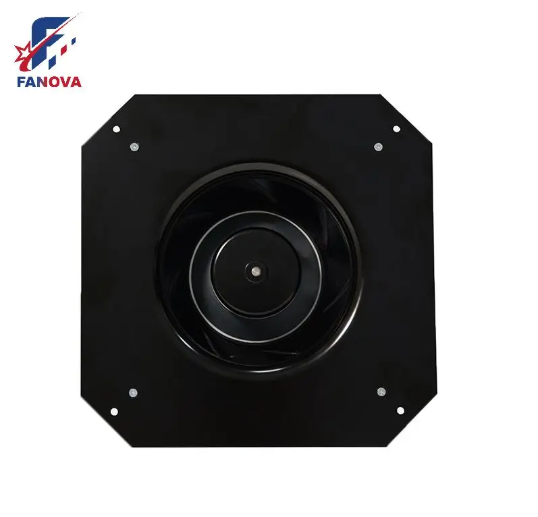
We must address the elephant in the room transparently. EC components carry a 15% to 50% higher initial procurement cost. We refer to this as your CAPEX. Many buyers hesitate at this upfront premium. They look at the initial vendor quote and reject the upgrade. However, stopping at CAPEX is a major financial mistake.
The OPEX reversal is where the real story lies. Let us look at a grounded mathematical example. Imagine a standard legacy AC fan. It draws 60W continuously throughout the year. Now, compare it to an equivalent low power fan using modern electronics. The new unit draws just 21W to move the exact same volume of air. You save 39W per unit immediately.
Now, let us scale this calculation. Multiply this 39W delta by hundreds of units running 24/7. Saving 39W equals 0.936 kWh per day. Over a full year, you save 341 kWh per fan. If your commercial electricity rate is $0.15 per kWh, you save over $51 annually per fan. If a facility runs 500 fans, that equals $25,500 saved annually. The CAPEX difference might only be $10,000 extra upfront. Your payback period shrinks to mere months.
We can frame this using the Carbon Trust principle. Energy savings generate direct revenue. The Carbon Trust cites a powerful business metric. Reducing energy costs by 20% impacts your bottom line dramatically. It equals a 5% increase in total sales volume. You achieve higher profitability without needing to manufacture or sell more products.
You must also factor in maintenance and lifespan. Lower operating temperatures naturally extend bearing life. The absolute lack of wearable brush components prevents sudden mechanical failure. You spend far less money on maintenance labor. Facility teams can focus on proactive system improvements instead of reactive emergency repairs.
Common Mistake: Never evaluate procurement bids based solely on the purchase order price. Always demand a ten-year operational cost projection. This projection must include local utility rates and expected maintenance labor hours.
You cannot rely on cost-cutting alone to justify facility upgrades. Upgrading to an energy efficient fan goes beyond internal budget goals. Global regulatory bodies now drive this adoption aggressively. Compliance is non-negotiable for modern commercial businesses. You must adapt now to avoid steep legal penalties later.
The European Union leads this charge. They published Regulation EU 2024/1834 recently. These stringent ecodesign rules take effect in July 2026. The industry refers to this as ErP 2026. This directive mandates a strict minimum total efficiency threshold. Specific centrifugal units must achieve up to 64% efficiency. Most legacy AC motors cannot physically reach this number. The law will ban non-compliant units from the market entirely. Facility managers cannot afford to install obsolete equipment today.
North American markets face overlapping mandates. The Department of Energy (DOE) continually tightens efficiency rules. The Environmental Protection Agency (EPA) also monitors building emissions closely. Facilities must comply with these evolving standards. Audits are becoming more frequent. Failing an energy audit results in heavy operational fines.
Asset valuation ties directly to these upgrades. Upgraded equipment improves your Energy Performance Certificate (EPC). Commercial real estate buyers look at EPC ratings first. Higher ratings demonstrate concrete sustainability to investors. They promise lower utility bills for future tenants. This compliance directly enhances your rental yield. It also boosts the final sale valuation of your commercial property significantly.
Different industries extract unique values from these hardware upgrades. Certain sectors see massive, immediate improvements. Let us explore where this technology makes the biggest impact today.
Data centers and telecom facilities face immense pressure. Cooling systems consume nearly 40% of total facility energy in these buildings. This is a massive operational pain point. We see extensive rack-level deployments happening today. Technicians place high-efficiency units directly into server cabinets. Precision Computer Room Air Conditioning (CRAC) upgrades are also vital. They improve overall system Uptime. Reliable cooling protects critical data infrastructure from catastrophic thermal shutdown.
We must focus deeply on commercial HVAC systems. Air Handling Unit (AHU) refurbishment offers incredible potential. You can retrofit legacy AHUs with modern fan arrays easily. Engineers call this a "fan wall" configuration. You replace one giant AC blower with a grid of smaller EC units. This immediately modernizes the system. It provides built-in redundancy. If one motor fails, the others speed up automatically to compensate. You avoid complete infrastructure tear-outs. The building stays fully operational during the upgrade process.
Cold chain logistics and medical facilities represent critical niche spaces. Precise temperature variability is strictly non-negotiable here. Vaccines and frozen goods require absolute thermal stability. Low acoustic profiles also matter greatly in medical settings. Reduced noise benefits resting patients and focused medical staff. EC units deliver quiet, perfectly stable cooling.
Data Centers: Massive energy reduction, rack-level precision, improved Uptime.
Office Buildings: Retrofit-friendly AHU upgrades, quiet operation, better tenant comfort.
Cold Chain: Immediate thermal response, stable environment, reduced product spoilage.
Hospitals: Acoustic control, reliable operation, compliance with indoor air quality standards.
Transitioning to modern thermal management requires careful planning. You cannot guess technical specifications. Buyers must evaluate complex aerodynamic metrics before signing a purchase order. Use this structured checklist to ensure a flawless installation.
Evaluate Airflow vs. Resistance: You must evaluate CFM carefully. Compare Cubic Feet per Minute strictly against the system's static pressure. Fluid resistance changes everything inside a duct. If you ignore static pressure, the unit will fail to move air effectively. This prevents critical undersizing mistakes. Review the manufacturer's performance curves.
Ensure Smart Control Compatibility: Look closely at the digital interface requirements. True smart ventilation requires seamless communication. Ensure the specified units support standard industrial protocols. Check the data sheet for 0-10V, PWM, or Modbus/RS485 connections. This guarantees frictionless Building Management System (BMS) integration. Your central computer must control the motors easily.
Check Footprint and Retrofit Constraints: Evaluate the physical dimensions first. You want the new hardware to operate as a true drop-in replacement. It must fit within existing HVAC enclosures perfectly. Measure the mounting brackets. Confirm the depth of the impeller. Avoid units that require heavy metalwork modifications.
Verify Safety & Compliance Certifications: Confirm necessary regional certifications early in the process. Look for CE, UL, and RoHS markings on the spec sheet. If you operate in Europe, verify ErP 2026 compliance explicitly. Do this before finalizing your vendor shortlist. Uncertified equipment causes massive legal headaches later.
Best Practice: Ask your shortlisted vendors for a 3D fluid flow analysis. Leading manufacturers will simulate the airflow inside your specific AHU. This removes all guesswork before installation.
The transition is obvious and unstoppable. Electronically commutated motors evolved quickly from a premium upgrade to a mandatory baseline. Modern industrial thermal management demands them exclusively. Facilities can no longer afford to waste power on outdated, friction-heavy legacy designs.
The final financial assessment is clear. The long-term OPEX savings are undeniable and rapid. A drastically reduced maintenance footprint helps your facility team focus on bigger problems. Furthermore, proactive protection against upcoming regulatory penalties is crucial. These immense operational benefits vastly outweigh the slightly higher initial capital expenditure.
We advise facility decision-makers to act now. Audit your current energy usage this quarter. Review your legacy AHU and server cooling setups immediately. Request a customized operational cost analysis from vetted manufacturers. Specify the correct hardware today, and secure the future performance of your building asset.
A: No. The conversion and control electronics are fully integrated into the motor housing. This internal design simplifies installation drastically. It also reduces points of failure. Facility managers avoid buying and programming external Variable Frequency Drives. You save both wall space and electrical infrastructure costs.
A: Yes. Most industrial EC fans are designed specifically as drop-in replacements. Facilities can quickly upgrade their legacy equipment. You modernize the system without overhauling existing AC electrical infrastructure. The built-in converter accepts standard AC grid power directly.
A: The payback period generally ranges from 1 to 3 years. This timeline depends heavily on local utility rates and operational hours. Because energy reductions reach up to 70%, operational savings accumulate fast. High-usage environments like data centers see the fastest returns on their initial investment.


