
Views: 0 Author: Site Editor Publish Time: 2026-06-09 Origin: Site


Industrial fans drive essential processes across manufacturing facilities worldwide. Unfortunately, they also consume massive amounts of electricity. Suboptimal performance directly inflates operating expenses. It also accelerates mechanical wear on critical components. You might purchase equipment boasting excellent laboratory ratings. However, rated performance rarely matches real-world operation once installed. Factory conditions introduce unexpected resistance. Aerodynamic hurdles disrupt smooth air movement. We want to help you solve this expensive gap. Engineering and procurement teams need a reliable, evidence-based framework. You must know how to evaluate, specify, and integrate equipment properly. This guide explores the physical principles driving true system performance. You will learn how blade selection impacts baseline limits. We reveal why installation layouts often destroy airflow potential. Finally, we cover critical sizing strategies to maximize long-term return on investment.
Design dictates baseline limits: The specific centrifugal impeller profile determines the maximum theoretical fan efficiency.
Installation alters reality: The "System Effect" (poor inlet/outlet ducting) is the leading cause of efficiency loss in ventilation engineering.
Sizing is critical: Operating a fan outside its Best Efficiency Point (BEP) drastically increases energy waste and mechanical stress.
Integration drives long-term ROI: Pairing the right drive mechanism and motor controls (VFDs) ensures airflow optimization as system demands fluctuate.
Let us rethink initial capital expenditure models. Facility managers often fixate heavily on the upfront purchase price. Yet, energy consumption makes up over 80% of a unit's lifetime expense. Operating a poorly specified machine drains maintenance budgets rapidly. You must focus on long-term energy accounting. Objective industry standards help you establish reliable benchmarks. The Air Movement and Control Association (AMCA) developed excellent evaluation tools. We recommend looking closely at the Fan Efficiency Grade (FEG). You should also evaluate the Fan Energy Index (FEI). These indices provide a universal, objective lens for evaluating aerodynamic performance.
What exactly defines a successful project in modern ventilation engineering? Success means hitting your target airflow (CFM) consistently. You must overcome system static pressure without struggle. You must achieve this with minimal brake horsepower (BHP) consumption. Additionally, you want to maintain extremely low vibration levels. Low vibration ensures your bearings and shafts last for years. Achieving these targets requires moving past theoretical laboratory data into practical engineering application.
Every application demands a specific mechanical approach. Your choice of a centrifugal impeller determines baseline potential. We must carefully evaluate aerodynamic capabilities against harsh operating environments. Blade geometry dictates how air moves through the housing.
These sophisticated designs offer the highest peak efficiencies available. You can routinely achieve 85% to 90% peak performance. They also feature a highly desirable non-overloading horsepower characteristic. The drive motor will not overload if system resistance drops unexpectedly. This provides an excellent safety net for variable processes. However, there is a distinct operational trade-off. These blades work best in clean, filtered environments. Airborne particulates easily stick to complex blade profiles. Material buildup causes severe mechanical imbalance. This imbalance leads to rapid bearing degradation and performance loss.
Radial and forward-curved options present lower maximum efficiency ceilings. They typically peak between 55% and 75%. Despite this lower rating, they remain essential for specific industrial tasks. Radial blades handle heavy dust loads effortlessly. Their flat, rugged design actively resists material buildup. They literally self-clean during rotation. Forward-curved models offer high air volumes in highly compact spaces. They work well in low-pressure commercial applications.
You must use a strict decision matrix here. Match your blade selection directly to the airstream characteristics. Consider particulate load, moisture content, and operating temperature before finalizing your decision. Relying on efficiency ratings alone without considering the air quality leads to catastrophic failures.
Blade Profile | Peak Efficiency Range | Best Operating Environment | Primary Limitation |
|---|---|---|---|
Airfoil | 85% - 90%+ | Clean air, forced draft, HVAC | Highly susceptible to dust buildup |
Backward-Curved | 80% - 85% | Clean to light particulate air | Complex fabrication increases cost |
Radial | 55% - 65% | Heavy dust, material handling | Lowest aerodynamic efficiency |
Forward-Curved | 60% - 75% | Low pressure, compact spaces | Motor can overload easily |
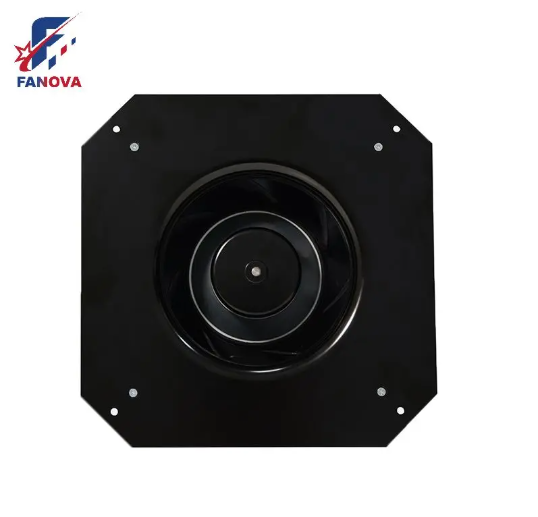
A highly efficient unit often fails in the real world. Surrounding ductwork can easily choke the airstream. This destructive phenomenon is known as the "System Effect." It represents the leading cause of wasted energy in modern industrial airflow systems. Poor installation negates premium engineering.
Inadequate inlet conditions restrict incoming air severely. Spin and pre-rotation enter the housing unevenly. This turbulence starves the wheel of proper air distribution. The impeller cannot pressurize turbulent air efficiently. You must maintain adequate clearance before the inlet opening. A standard rule of thumb requires at least three duct diameters of straight run. This unobstructed straight run ensures uniform, predictable flow into the eye.
Outlet conditions prove equally critical to dynamic pressure recovery. Abrupt duct transitions destroy kinetic energy immediately. Sharp elbows placed right after the discharge ruin static pressure. Air needs adequate space to expand and stabilize uniformly. If you force air to turn immediately, it crashes into duct walls.
System effect losses represent hard physical realities. You cannot simply out-tune them with digital controls. Increasing the operating speed to compensate triggers massive energy penalties. It also accelerates mechanical fatigue rapidly. Fixing ductwork geometry yields far better returns than brute-forcing motor speed.
Proper sizing determines long-term reliability and energy conservation. We use specific evaluation frameworks to match components accurately. The equipment performance curve must precisely intersect the system resistance curve. This intersection dictates exactly how the unit will behave.
Many engineers fall into a dangerous oversizing trap. They add excessive safety margins to static pressure estimates. They assume a bigger unit is always a safer choice. This practice results in massive, oversized equipment. These units run highly inefficiently at partial loads. They operate far off their Best Efficiency Point (BEP). Operating outside the BEP triggers turbulence, stall conditions, and severe vibrations. A poorly sized Centrifugal Fan wastes horsepower continuously. It fights itself instead of moving air effectively.
You must prioritize strict data validation. Never guess system resistance values based on old, outdated blueprints. We strongly recommend rigorous on-site measurement. Calculate actual duct friction and component pressure drops accurately. Factor in dirty filters, heat exchangers, and dampers. Finalize your mechanical specifications only after validating these real-world field metrics.
System scalability relies on proper power transmission. The motor and drive must transfer rotational energy smoothly to the shaft. Proper mechanical integration dictates your overall fan efficiency. You have multiple choices for power transmission, each carrying specific implications.
Direct drive arrangements couple the motor directly to the wheel. This streamlined setup involves far fewer moving parts. It provides near 100% transmission efficiency from motor to impeller. Maintenance requirements drop significantly because there are no belts to replace. Belt drives offer speed flexibility but introduce mechanical friction. You can expect 2% to 5% transmission losses instantly. Belts also stretch and slip over time. They demand strict, ongoing maintenance protocols. Failure to tension belts properly leads to severe efficiency drops.
Variable Frequency Drives (VFDs) represent a compliance and optimization standard today. Industrial demands fluctuate regularly based on production cycles. VFDs adjust motor RPM automatically to match these exact needs. This yields cubed reductions in electrical energy consumption. This principle follows the fundamental Fan Laws of physics. Lowering rotational speed reduces horsepower requirements exponentially. A 20% reduction in speed cuts energy use by nearly 50%. This approach vastly outperforms traditional inlet vanes or mechanical dampers. Dampers simply choke the system, wasting massive amounts of previously generated energy.
Purchasing the right equipment requires systematic, objective evaluation. Technical buyers should follow an actionable shortlisting logic. Here are vital steps to specify your next unit effectively. These steps protect your capital investment.
Demand verifiable performance curves from your manufacturer. Ensure they provide AMCA-certified test data for their equipment.
Supply vendors with comprehensive gas and air composition data. Include precise air density, maximum temperature, and chemical corrosiveness. This transparent data prevents catastrophic material mismatches.
Evaluate vendor capabilities regarding advanced engineering design tools. Ask if they use computational fluid dynamics (CFD) modeling software. CFD helps visualize custom installation challenges long before metal fabrication begins.
Take immediate action before issuing a Request for Quote (RFQ). Schedule a system-wide energy audit with your maintenance team. You should consult with a specialized application engineer. They will assess your current ductwork and pressure requirements properly. Connect with experienced professionals at our airflow optimization support center to validate your operational data.
Achieving peak aerodynamic performance requires a truly holistic approach. It goes far beyond simply buying a premium motor. True efficiency encompasses specific blade design, precise sizing, and intelligent installation. You must align your equipment curve with real-world duct resistance. Avoid the trap of excessive safety margins. Embrace modern VFD controls to manage fluctuating demands smoothly without wasting electricity.
Actionable next steps to implement today:
Audit your existing duct transitions for severe system effect losses.
Measure field static pressure manually before specifying new equipment.
Eliminate mechanical dampers in favor of variable speed motor drives.
Ready to upgrade your industrial ventilation network? Reach out to our engineering team today. We can provide a comprehensive system evaluation, custom sizing consultation, or an in-depth retrofit assessment to ensure you get the most out of your infrastructure.
A: While the volume (CFM) moved remains constant, air density changes drastically with temperature and altitude. Denser air requires more effort to move. This directly impacts the static pressure generated and the required brake horsepower. If you operate at high altitudes or elevated temperatures, you must adjust your performance calculations to ensure the motor can handle the actual mass flow safely.
A: Realistic ranges span from 60% to over 85%, depending heavily on the blade profile and application. Forward-curved and radial blades typically peak lower, often around 60% to 75%. Airfoil and backward-inclined blades can achieve 80% to 90% peak performance in clean airstreams. Always reference the AMCA Fan Efficiency Grade (FEG) for objective benchmarking.
A: Yes, retrofitting a Variable Frequency Drive highly improves performance in systems with variable demand. VFDs adjust the motor speed to match exact airflow requirements. This eliminates the massive mechanical energy losses associated with traditional throttling dampers. However, you must verify that your existing motor is inverter-duty rated and VFD-compatible before upgrading.
A: You should establish a standard preventative maintenance baseline, conducting monthly to quarterly inspections. Focus on checking drive belt tension, evaluating impeller balance, and ensuring proper bearing lubrication. Catching these issues early prevents friction buildup and severe aerodynamic losses. Clean the blades regularly to prevent particulate accumulation from destroying the wheel's balance.


